
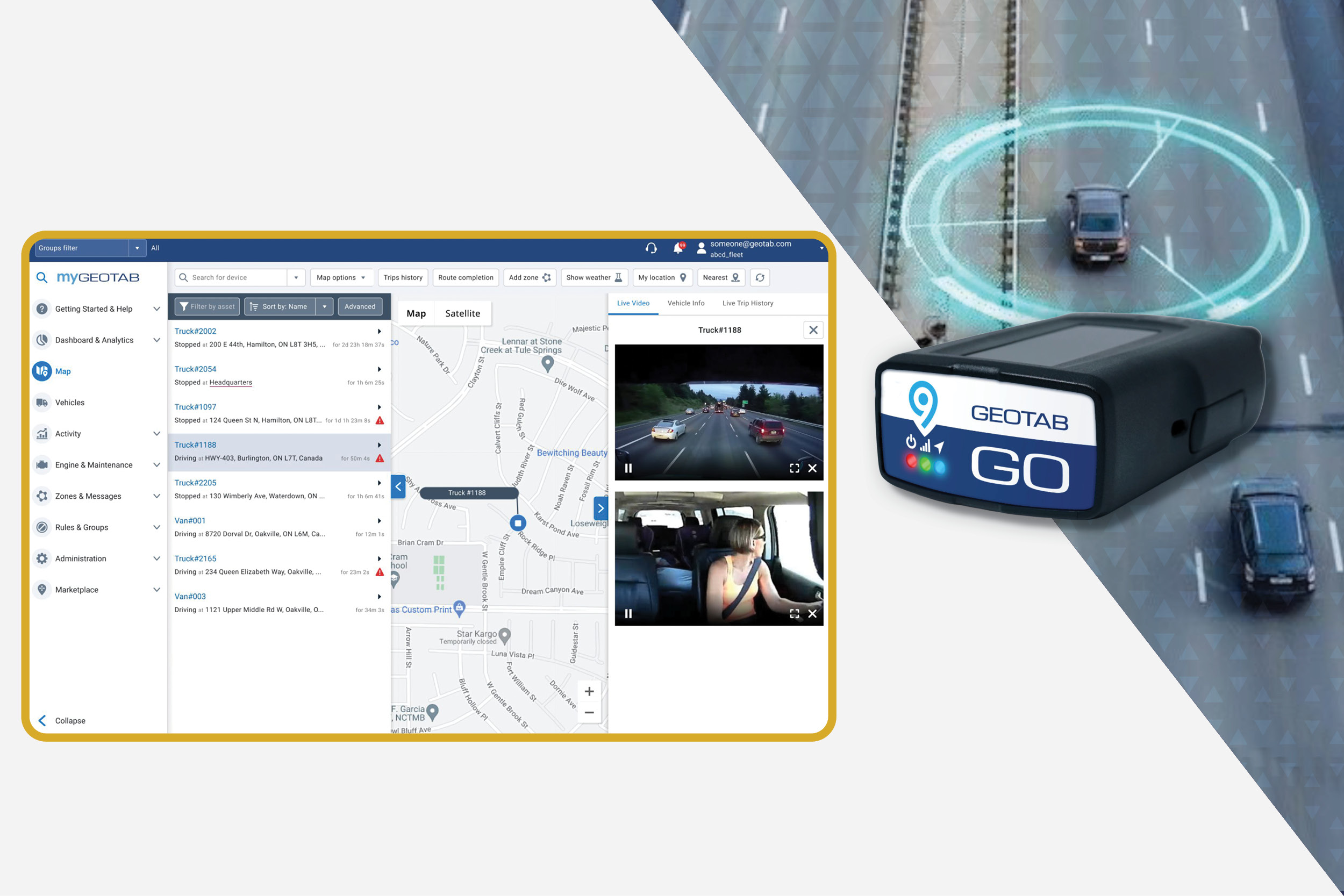
Telematics gives fleet managers greater visibility into their vehicles, drivers, maintenance needs, and operating costs.
By combining GPS tracking, vehicle data, cameras, and software, telematics turns information from your fleet into actionable insights that can help you operate more safely and efficiently.
For businesses operating anywhere from a handful of vehicles to a larger fleet, that visibility can help answer important questions: Where are our vehicles? How are they being driven? Are we keeping up with maintenance? Are vehicles sitting idle? And are we getting the most value from every vehicle in the fleet?
What Can Fleet Telematics Do?
Improve Driver Safety and Accountability
Telematics can provide greater insight into driving behavior and give fleet managers opportunities to address potential safety issues before they become bigger problems.
Depending on the solution, fleets can monitor speeding and aggressive driving, identify driver coaching opportunities, reconstruct collisions and generate incident reports. Video safety solutions can also provide additional context around incidents and help support driver exoneration when a driver isn’t at fault.
The goal isn’t simply to monitor drivers. It’s to use better information to create a safer fleet while reducing accident-related risk.
Know Where Your Fleet Is
For businesses with vehicles moving throughout the day, knowing where those vehicles are—and how they’re being used—can make everyday operations easier.
Telematics can provide:
- Real-time vehicle locations
- Driver activity and route history
- Information to help dispatch the closest driver to a job
- Tracking for trailers, equipment and other assets
That visibility can be particularly valuable for service businesses and other organizations where vehicles and employees are constantly moving between locations.
Stay Ahead of Maintenance
Unexpected breakdowns aren’t just expensive. They can take a vehicle out of service, disrupt schedules and impact customers.
Telematics can provide engine diagnostics and fault codes, automatically track mileage and engine hours, and generate maintenance reminders.
Instead of relying solely on spreadsheets, driver reports or manual odometer checks, fleet managers can use actual vehicle data to help determine when service is needed.
Reduce Fleet Operating Costs
Small inefficiencies multiplied across an entire fleet can add up quickly.
Telematics gives businesses data they can use to identify opportunities to reduce waste and improve efficiency, including fuel usage monitoring, idle-time reporting, fleet benchmarking and performance analysis.
Rather than guessing where costs might be coming from, fleet managers have information they can use to investigate them.
Make Better Vehicle Replacement Decisions
Telematics can also help answer a bigger strategic question: Are you using the right vehicles—and getting enough value from them?
Vehicle usage data can help identify underutilized vehicles, determine when vehicles should be replaced, maximize potential resale value and develop more effective fleet cycling strategies.
This moves telematics beyond day-to-day tracking and makes it part of the fleet’s long-term acquisition and replacement strategy.
Choosing the Right Telematics Solution
Not every fleet needs the same technology.
A company primarily concerned with maintenance may need a different setup than one focused on driver safety, dispatching or asset tracking. That’s why LAI Fleet starts by evaluating your fleet’s goals, operations and budget before recommending a telematics solution.
Through Geotab’s telematics platform, LAI Fleet can help businesses integrate vehicle tracking and data into a broader fleet strategy.
Telematics Is Only One Part of the Fleet
The biggest opportunity comes from connecting telematics data with the rest of your fleet strategy.
LAI Fleet combines Geotab’s platform with nearly 70 years of fleet management experience to help organizations acquire, manage, maintain and track their vehicles more effectively.
Want to know what telematics could do for your fleet?
Talk with an LAI Fleet specialist about your vehicles, current challenges and goals. We’ll help determine which telematics capabilities make sense for your operation—and which ones you don’t need.